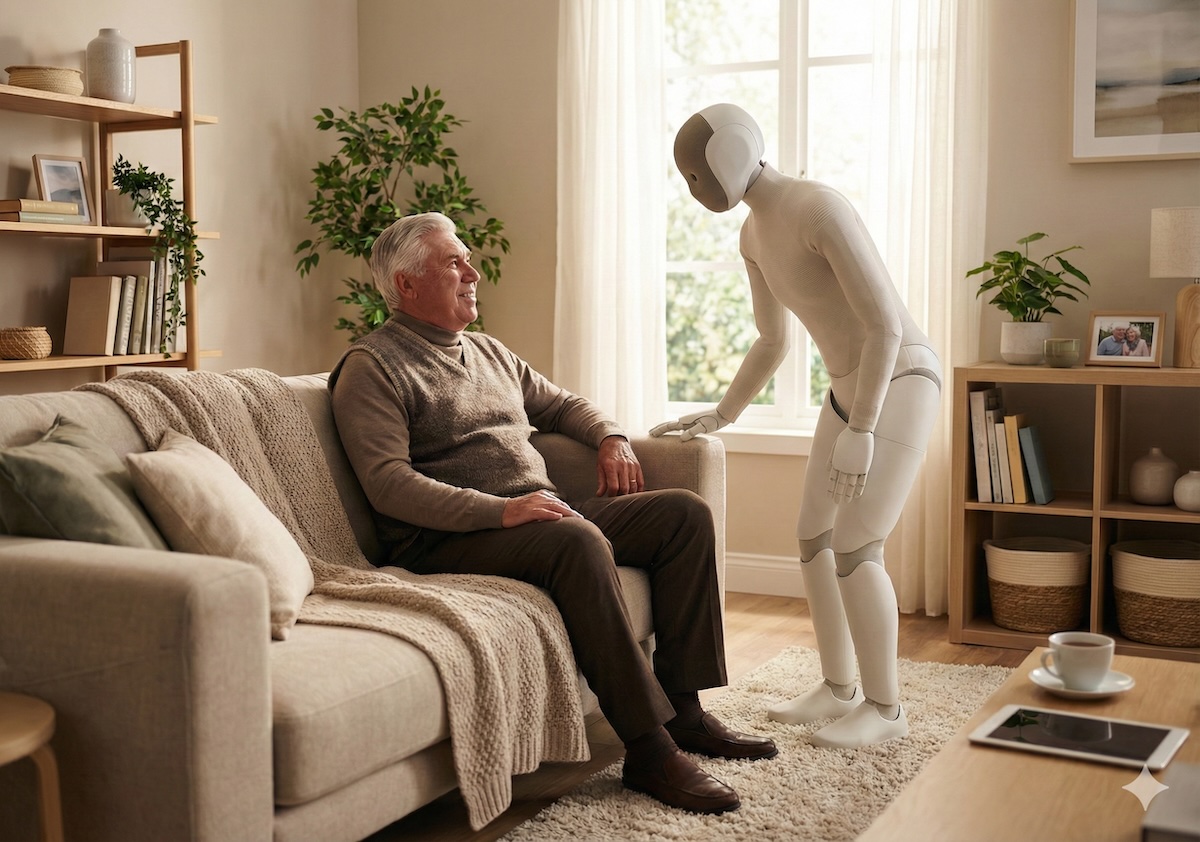
How Humanoid Robots Are Transforming Elder Care
How Humanoid Robots Are Transforming Elder Care
As our population ages, families everywhere face a growing challenge: how to ensure their loved ones receive care, companionship, and safety without taking away the independence they value so deeply. Humanoid robots are beginning to play an important role in bridging that gap.
Rather than replacing human caregivers, these robots act as supportive companions that help seniors remain comfortable and confident in their own homes.
The Elder Care Challenge
Many adult children live far from their aging parents. Professional in-home care can be costly and is not always available on demand. At the same time, most seniors want to remain in familiar surroundings and maintain control over their daily lives.
This combination of distance, cost, and independence creates a difficult situation for families. Technology now offers a new layer of support that can ease this burden.
Companionship Without Intrusion
One of the most meaningful roles a humanoid robot can provide is simple presence. For seniors who live alone, a robot companion can:
- Engage in daily conversation and light social interaction
- Create a sense of routine and familiarity
- Help reduce feelings of isolation and loneliness
- Offer entertainment and mental stimulation
Unlike a full-time caregiver, a robot provides companionship without the feeling of constant supervision. It can be there when needed and unobtrusive when not.
Practical Daily Support
Beyond emotional connection, humanoid robots can assist with everyday tasks and reminders.
Medication Reminders
Robots can be programmed to remind seniors when it is time to take medication, helping ensure schedules are followed consistently and safely.
Appointment Tracking
Doctor visits, family calls, and other important events can be tracked and announced, reducing the stress of remembering complex schedules.
Safety Awareness
While not a substitute for medical monitoring systems, robots can recognize unusual inactivity or behavior patterns and notify family members if something appears out of the ordinary.
Video Communication
Built-in video calling makes it easy for seniors to stay connected with children, grandchildren, and caregivers, even when they live far away.
Preserving Independence
The purpose of robotic assistance is not to replace people. It is to extend the time seniors can comfortably live on their own terms. By handling routine reminders and offering companionship between visits, robots can support independence while still keeping families informed and connected.
This approach often allows older adults to stay in their homes longer, delaying or avoiding the need for assisted living facilities.
Is It Right for Your Family?
Every family is different, and every senior responds to technology in their own way. Some embrace it immediately. Others need time and gentle introduction.
That is why we encourage families to try robotic support at home before making long-term decisions. A trial period allows you to see:
- How your loved one reacts to the robot
- Which features are most helpful day to day
- Whether the technology improves their quality of life
- How it affects your peace of mind as a caregiver or family member
Getting Started
Our elder care home trial program is designed specifically for families exploring this option. We focus on careful onboarding, patience, and comfort so that your loved one feels supported rather than overwhelmed.
If you are searching for ways to help an aging parent or grandparent stay safe, connected, and independent, we invite you to learn more about our elder care program or join our waitlist for upcoming trials.