Symbotic Acquires Fox Robotics: The Warehouse Automation Consolidation Begins
Symbotic Acquires Fox Robotics: The Warehouse Automation Consolidation Begins
The acquisition is strategic validation for the broader thesis: operational scale requires integrated platforms, not point solutions.
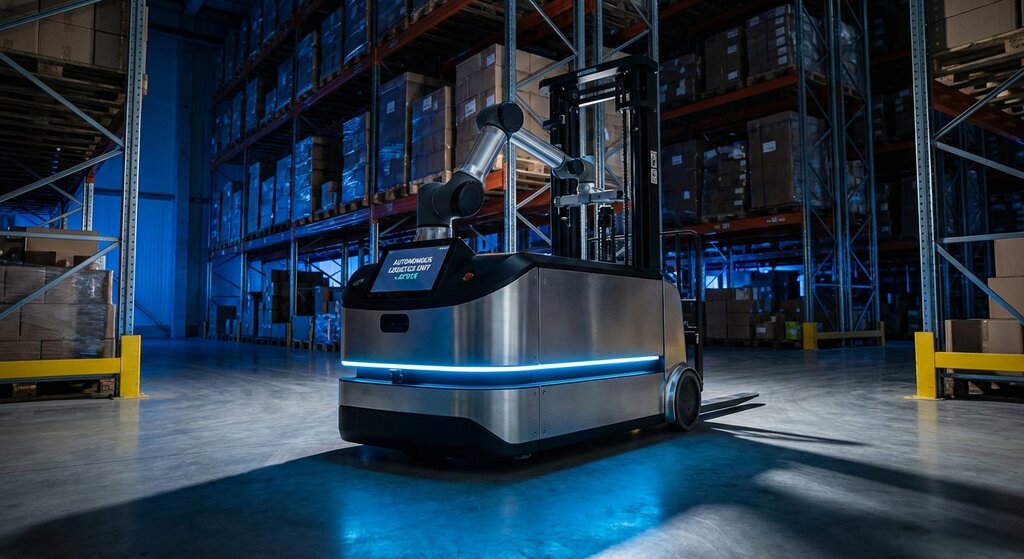
Symbotic announced this week that it has acquired Fox Robotics, the Austin-based developer of autonomous forklift systems. The deal, announced during Symbotic's Q1 2026 earnings call, marks a significant expansion beyond Symbotic's traditional strength in fixed warehouse automation—those towering robotic systems that handle case and tote handling in massive distribution centers.
Why This Matters for Humanoid Infrastructure
At first glance, forklifts might seem far removed from humanoid robotics. But look closer, and the strategic pattern is unmistakable.
The same consolidation pressure that is reshaping warehouse automation will hit humanoid deployment next.
Symbotic's CEO Rick Cohen was explicit about the logic: "Some M&A could be a way of acquiring customers and getting much more interaction with the customers." Fox Robotics brings Symbotic into facilities where autonomous forklifts handle the heavy pallet movement—complementing Symbotic's existing systems that manage the dense storage and retrieval layers above.
Today, Fox Robotics has 100+ autonomous forklifts deployed across 54 customer sites. Most of these are pilot programs with 25 identified customers. Critically, most Fox customers are not currently Symbotic customers—though they share at least one major one: Walmart, which accounts for nearly 90% of Symbotic's revenue.
The Infrastructure Playbook
What Symbotic is doing with fixed-to-mobile integration is a preview of what the humanoid ecosystem needs.
Fox Robotics' forklifts handle pallet transport from warehouses to trucks. They're solving a literal edge case—the boundary between warehouse operations and transportation networks. This is exactly where humanoid robots will find their early commercial traction: at hand-off points, in unstructured environments, in spaces not purpose-built for automation.
The takeaway for operators: The winners won't be the companies with the best individual robots. They'll be the companies that can integrate robots into broader operational workflows.
This is why Robot Rental Company's infrastructure-layer approach—delivery, charging, sterilization, maintenance, recovery—is designed to be robot-agnostic. Whether it's an autonomous forklift from Fox, a case-handling system from Symbotic, or a humanoid from 1X, Figure, or Apptronik, the operational infrastructure looks remarkably similar.
Market Consolidation Signal
The acquisition also reflects a broader trend: the warehouse automation market is consolidating around platforms that can offer end-to-end solutions.
Fox Robotics raised approximately $66 million over its lifetime. Being acquired by Symbotic—already a public company with established customer relationships and manufacturing scale—represents a logical path to deployment velocity that would have been difficult to achieve independently.
For humanoid developers watching this: The window for proving independent commercial viability may be narrowing. The companies that secure operational partners—or get acquired by platforms with distribution—will move faster than those trying to build go-to-market alone.
What Robot Rental Company Is Tracking
We're watching three threads that this acquisition pulls on:
-
Customer overlap patterns: How many Fox customers can Symbotic convert to broader platform deals? This is the same challenge we'll face when deploying humanoids into facilities already using other automation.
-
Mobile-fixed integration complexity: The technical and operational challenges of blending autonomous forklifts with dense storage systems mirror what we'll face integrating humanoids with existing warehouse infrastructure.
-
Walmart's automation strategy: As Symbotic's dominant customer, Walmart's adoption curve is a proxy for market readiness. If they're expanding automation scope—first Symbotic systems, now Fox forklifts—it signals continued institutional confidence in robotics ROI.
The Bottom Line
This acquisition isn't just about forklifts. It's about recognizing that robotic automation is transitioning from experimental technology to core infrastructure—and infrastructure requires integrated platforms, not siloed solutions.
For humanoid robotics specifically, Symbotic's expansion strategy suggests the winners won't be the companies that build the best bipedal robots in isolation. They'll be the companies that can slot humanoids into operations where other automation already lives—and make them work together.
That's exactly what we're building at Robot Rental Company. Not just access to robots, but the operational infrastructure that makes them useful at scale.
The era of point solutions is ending. The era of integrated automation infrastructure is just beginning.