Boston Dynamics CEO Robert Playter Steps Down — What It Means for the Industry
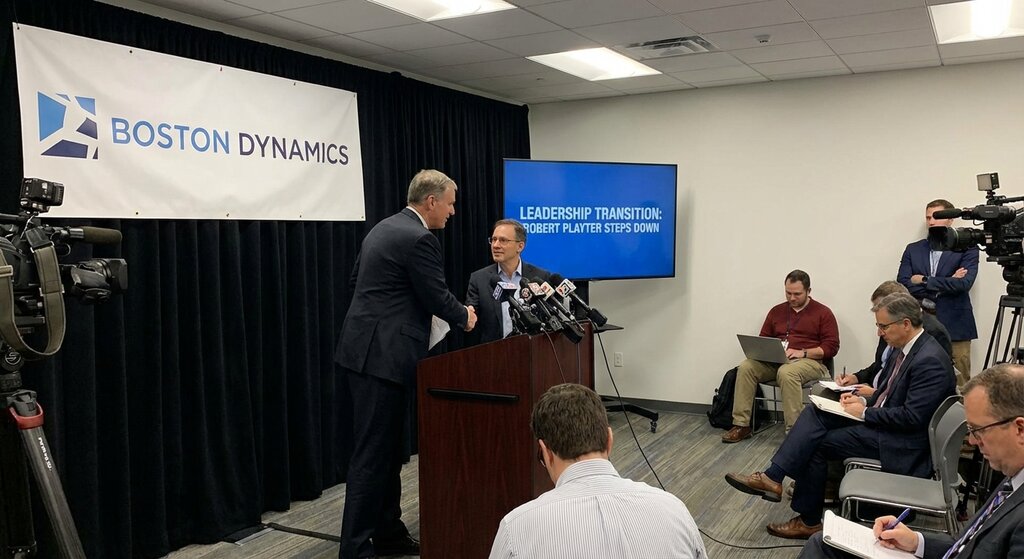
After 30 years at Boston Dynamics — including six as CEO — Robert Playter announced he's stepping down, effective February 27th. He transformed a small MIT research lab into the most recognized name in robotics. His departure marks a turning point not just for Boston Dynamics, but for the entire humanoid ecosystem.
The legacy is real. Playter oversaw the evolution from BigDog and hydraulic Atlas to the electric Atlas platform now heading into Hyundai factories. Under his leadership, Spot became the first commercially successful legged robot, and Atlas went from viral backflip videos to legitimate industrial deployment. He didn't just build robots — he built public imagination around what robots could be.
But the timing tells a story.
Playter's exit comes at an inflection point. Hyundai acquired 80% of Boston Dynamics in 2020, and the company has been pivoting hard from research showcase to commercial product company. The new electric Atlas, the Spot fleet expansions, the Hyundai factory integrations — these are the moves of a company entering its operational era. And operational eras often need different leadership than pioneering ones.
What This Means for the Ecosystem
Leadership transitions at flagship companies create ripple effects. When the CEO of the most iconic robotics company in history steps down, every player in the space pays attention.
For manufacturers: Boston Dynamics' pivot to commercial deployment under new leadership will likely accelerate. Hyundai wants ROI on their investment. That means more robots in more facilities, faster — which expands the total addressable market for everyone.
For the operational layer: More robots deployed means more robots that need logistics, maintenance, setup, and recovery. Every Atlas unit in a Hyundai factory needs someone thinking about uptime, technician training, and fleet management. That's infrastructure work, and it's exactly the gap that operational partners fill.
For the market: This transition validates what we've been saying — the robotics industry is leaving its research phase and entering its deployment phase. When a 30-year research veteran hands the keys to whoever comes next, it's because the next chapter is about scaling, not inventing.
Meanwhile, the Competition Isn't Waiting
While Boston Dynamics navigates its transition, Unitree just demonstrated their G1 humanoid completing 130,000+ autonomous steps in -47°C conditions in China's Altay region. That's not a lab demo — that's extreme environment validation. The humanoid market shipped 13,000 units globally last year; projections put China alone at 28,000 this year.
The race isn't slowing down. If anything, Playter's departure signals that the starting gun has already fired. The pioneers built the technology. Now the operators need to deploy it.
The Bottom Line
Robert Playter's legacy is secure — he literally helped invent the modern humanoid robot. But his departure underscores a fundamental shift: the hard part isn't building robots anymore. The hard part is putting them to work.
That's the chapter we're entering. And it's the chapter that needs operational infrastructure more than ever.