Apptronik Raises $935M: What the Largest Humanoid Funding Round Means for Robot Deployment
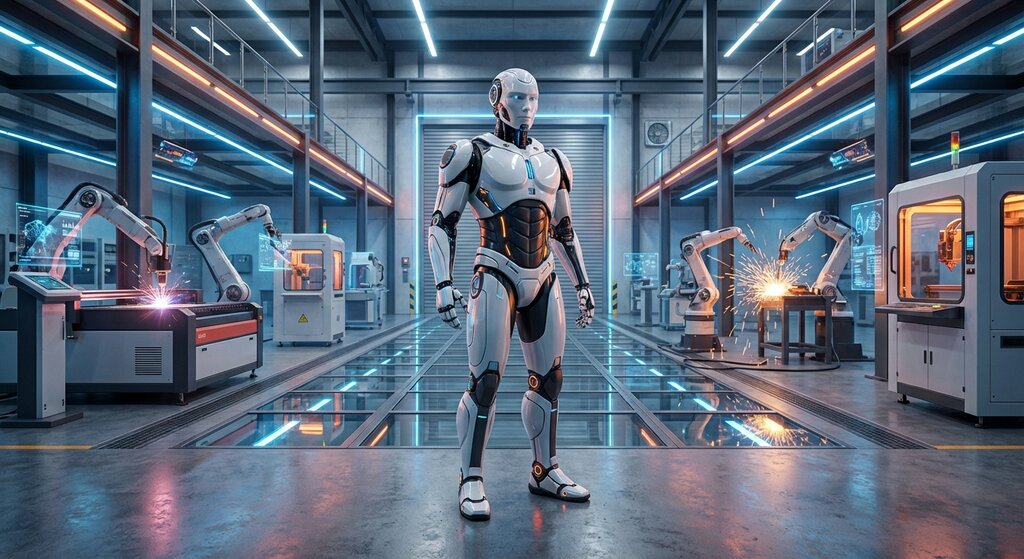
The humanoid robotics market just hit a new gear.
Today, Apptronik announced a staggering $935 million Series A funding round, with an additional $520 million Series A-X extension, bringing their total raised to nearly $1 billion. That's not just a funding round—it's a declaration that the humanoid era has arrived.
The investor list reads like a roll call of industrial giants: Google, Mercedes-Benz, John Deere, AT&T Ventures, B Capital Group, and Qatar Investment Authority (QIA). These aren't speculative tech investors betting on distant futures. These are strategic operators who see humanoid robots transforming their industries now.
What Apptronik Is Building
Founded by a team with deep roots in the DARPA Robotics Challenge and NASA's Valkyrie project, Apptronik has spent years developing Apollo—a 5'8", 160-pound humanoid designed for real-world logistics and manufacturing environments. Unlike research platforms built for viral videos, Apollo was engineered for uptime, repeatability, and integration with existing warehouse operations.
This funding accelerates everything:
- Production ramp of Apollo units
- Global commercial deployments and pilot programs
- Next-generation training facilities for robot learning at scale
- Real-world impact across manufacturing, logistics, and beyond
Why This Matters for the Market
To put $935M in context: Figure AI recently raised at a $39.5 billion valuation. 1X Technologies locked in a partnership for up to 10,000 NEO robots with EQT's 300+ portfolio companies. Tesla is retooling Fremont for Optimus production. And now Apptronik has nearly a billion dollars to scale Apollo.
The signal is unmistakable: Institutional capital is flooding into humanoid robotics. The hardware is graduating from demo to deployment.
But here's what the headlines won't tell you: The deployment infrastructure isn't ready.
The Infrastructure Gap
When Mercedes-Benz wants Apollo robots in their factories, they don't just unbox them and plug them in. They need:
- Delivery and installation at scale
- Charging infrastructure and battery management
- Sanitization protocols between shifts and locations
- Maintenance, repair, and parts logistics
- Recovery and redeployment as needs change
- Fleet management software to coordinate hundreds of units
Apptronik is building incredible robots. Their investors are betting on massive deployment. But who handles the operational layer—the "Layer 2" that makes it all work?
The AWS Parallel
Amazon Web Services didn't win by building servers. They won by making compute accessible—on-demand, flexible, operationally seamless.
The humanoid robotics market is following the same pattern. Manufacturers like Apptronik, 1X, Figure, and Boston Dynamics are building the "servers." The next trillion-dollar opportunity is the infrastructure layer that deploys, maintains, and manages them.
That's the Robot Rental Company thesis. We're not betting on which manufacturer wins. We're building the operational infrastructure that makes all of them usable at scale.
What This Means for 2026
Apptronik's funding validates three critical trends:
1. B2B First With John Deere and Mercedes-Benz as investors, the near-term focus is clear: warehouses, logistics, manufacturing. Commercial deployments lead before consumer markets follow.
2. Speed Matters $935M isn't patient capital. These investors expect deployment velocity. That creates immediate demand for operational partners who can deliver robots to facilities, keep them running, and scale as programs expand.
3. The Infrastructure Layer Is Underserved For every billion dollars poured into robot hardware, a fraction goes to the deployment and service infrastructure. That imbalance creates opportunity.
The Partnership Opportunity
Apptronik's announcement specifically mentions "expanding global commercial and pilot deployments." Translation: They need help getting Apollo into the field.
Robot Rental Company is positioned as that operational partner. We've built:
- Fleet management infrastructure for multi-manufacturer deployments
- Broker approval workflows for flexible rentals and trials
- Real-time telemetry and monitoring for operational visibility
- Service and recovery protocols for maintaining uptime
When manufacturers like Apptronik need to deploy at scale, they can't build every capability in-house. They need infrastructure partners. That's RRC.
The Bottom Line
The humanoid robotics market just passed a threshold. We're no longer debating if these robots will transform industries. We're debating how fast and who handles the deployment.
Apptronik's $935 million is a vote of confidence in the hardware. Now the race is on for the infrastructure layer that makes that hardware accessible, maintainable, and scalable.
At Robot Rental Company, we're building that layer. Because when the robots arrive—and they're arriving now—somebody has to deliver them.
Robot Rental Company is building the operational infrastructure for humanoid robot deployment. Home trials begin July 2026. Commercial fleet operations launching soon.
Want to experience the future? Join our waitlist for early access to NEO, Apollo, and the entire humanoid fleet.